

Preview
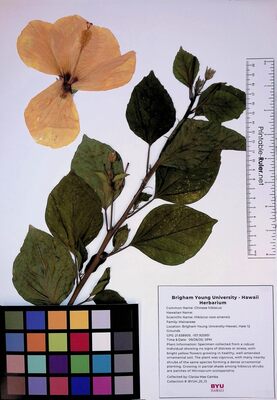
Scientific Name
Hibiscus rosa-sinensis
Class
Magnoliopsida
Order
Malvales
Family
Malvaceae
Genus
Hibiscus
Status in Hawaii
Introduced
Native Region
Tropics
Cultural Significance
Hibiscus rosa-sinensis is one of the most important hibiscus species cultivated worldwide and is best known as a highly valued ornamental plant with diverse flower forms and colors. In the Philippines, it is regarded as the “queen of the Filipino garden,” while it also holds national flower status in countries such as Malaysia. Beyond its ornamental appeal, hibiscus is widely used for food, feed, industrial, and medicinal purposes, including as a natural colorant, salad ingredient, and in the production of jams, as well as in traditional remedies for hair fall, dandruff, infections, and for its expectorant, diuretic, and emollient properties. The plant also carries strong cultural symbolism, particularly in Haiti, Tahiti, and Hawaii. Although its exact origin remains uncertain, studies suggest it may have originated from India, China, or the Americas. Hibiscus rosa-sinensis is broadly distributed in tropical and subtropical regions and includes numerous cultivars with varied floral traits. Related hibiscus species, some of which are winter-hardy and economically valuable, possess beneficial characteristics such as pest and disease resistance, drought tolerance, and waterlogging tolerance, making them important genetic resources for breeding. Extensive intraspecific breeding efforts worldwide have resulted in the development of thousands of hibiscus cultivars.
Sources
Hibiscus rosa-sinensis - Plant Finder. (n.d.). Www.missouribotanicalgarden.org. https://www.missouribotanicalgarden.org/PlantFinder/PlantFinderDetails.aspx?kempercode=b557 Vélez-Gavilán, J. (2022). Hibiscus rosa-sinensis (Chinese rose). CABI Compendium, CABI Compendium. https://doi.org/10.1079/cabicompendium.27128
Magdalita, P. M., & San Pascual, A. O. (2022). Hibiscus (Hibiscus rosa-sinensis): Importance and Classification. Floriculture and Ornamental Plants, 483–522. https://doi.org/10.1007/978-981-15-3518-5_18
Collection Date
Fall 9-26-2025
Collection Number
BYUH_25_13
Recommended Citation
Gamba, Clariza Mae Anoc, "Yellow Chinese Hibiscus" (2025). Herbarium Collection. 8.
https://digitalcollections.byuh.edu/herbarium/8