

Preview
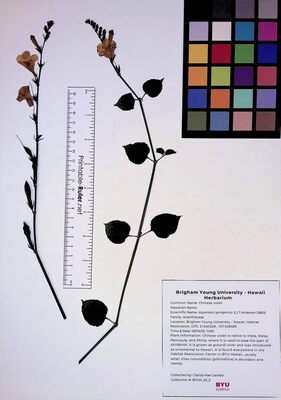
Alternate Name(s)
Coromandel
Scientific Name
Asystasia gangetica
Class
Magnoliopsida
Order
Lamiales
Family
Acanthaceae
Genus
Asystasia
Native Region
Tropical Africa, Tropical Arabia, Tropical Asia
Cultural Significance
Asystasia gangetica holds broad cultural significance across Africa and Asia as both a food and medicinal plant. In East Africa it serves as an important leafy vegetable—especially in times of scarcity—and is commonly cooked with beans, groundnut, or sesame, while also valued as livestock forage due to its ability to thrive in shade. Across many cultures it functions as a versatile traditional remedy: infusions ease childbirth pain; sap and decoctions treat wounds, respiratory ailments, stomach issues, epilepsy, and rheumatism; and various preparations address coughs, infections, and even snakebites. Beyond food and medicine, it is appreciated for its ecological and practical roles, such as preventing erosion, suppressing weeds, attracting bees in orchards, and occasionally serving as an ornamental plant.
Sources
Asystasia gangetica (L.) T.Anderson | Plants of the World Online | Kew Science. (n.d.). Plants of the World Online. https://powo.science.kew.org/taxon/urn:lsid:ipni.org:names:45742-1
Asystasia gangetica | Plant Pono. (2020, January 28). Plant Pono. https://plantpono.org/high-risk-plants/asystasia-gangetica/
Asystasia gangetica. (n.d.). Prota.prota4u.org. https://prota.prota4u.org/protav8.asp?g=pe&p=Asystasia+gangetica
Collection Date
Fall 9-16-2025
Collection Number
BYUH_25_2
Recommended Citation
Gamba, Clariza Mae Anoc, "Chinese Violet" (2025). Herbarium Collection. 2.
https://digitalcollections.byuh.edu/herbarium/2